Aquafood
Website
Aquafood
is an early-stage venture focused on sustainable innovation in the food and aquaculture industries. Their approach is rooted in agility and collaboration, working closely with suppliers and customers to adapt quickly and explore new opportunities. With a strong commitment to environmental stewardship, AquaFood partners only with like-minded organizations that prioritize sustainability and side-stream reduction.They offer adaptable, B2B-focused solutions designed to meet a range of industry needs—empowering their partners to innovate in a constantly evolving market.
Problem
As an early-stage startup, AquaFood lacked a digital presence to clearly communicate their values, mission, and offerings. They needed a website that could grow with them—one that not only established credibility with potential partners but also reflected their commitment to sustainability and innovation. The challenge was to distill a complex, evolving business vision into a clear, compelling, and user-friendly experience for a diverse B2B audience.
Goal
Create a clean, modern, and adaptable web presence that reflects AquaFood’s innovative and sustainability-driven mission. The goal was to communicate their entrepreneurial spirit, highlight their commitment to environmental stewardship, and appeal to a diverse B2B audience—while maintaining flexibility for future content and business evolution.
Research
The process started with understanding AquaFood’s mission, business goals, and position as a sustainability-driven B2B startup. Stakeholder input helped define the primary audience as partners and industry professionals seeking clarity, credibility, and innovation. A review of comparable food-tech and sustainable brands informed content structure and messaging patterns. These insights shaped the site map, content hierarchy, and early wireframes, ensuring the website clearly communicates AquaFood’s value while remaining flexible for future growth.
AquaFood’s primary audience consists of B2B stakeholders in the food, aquaculture, and sustainability sectors. This includes potential partners, such as eco-conscious suppliers, distributors, and food innovation companies looking for sustainable sourcing and collaborative development opportunities.
Process
Targer audience
Design
Wireframes
Low-fidelity wireframes were created to define the website’s structure and information hierarchy before visual design. The focus was on clear content flow, intuitive navigation, and highlighting key messages for a B2B audience. Wireframes helped validate layout decisions early, align pages with business goals, and ensure the site could scale as AquaFood’s products and partnerships grow.
Project showcase
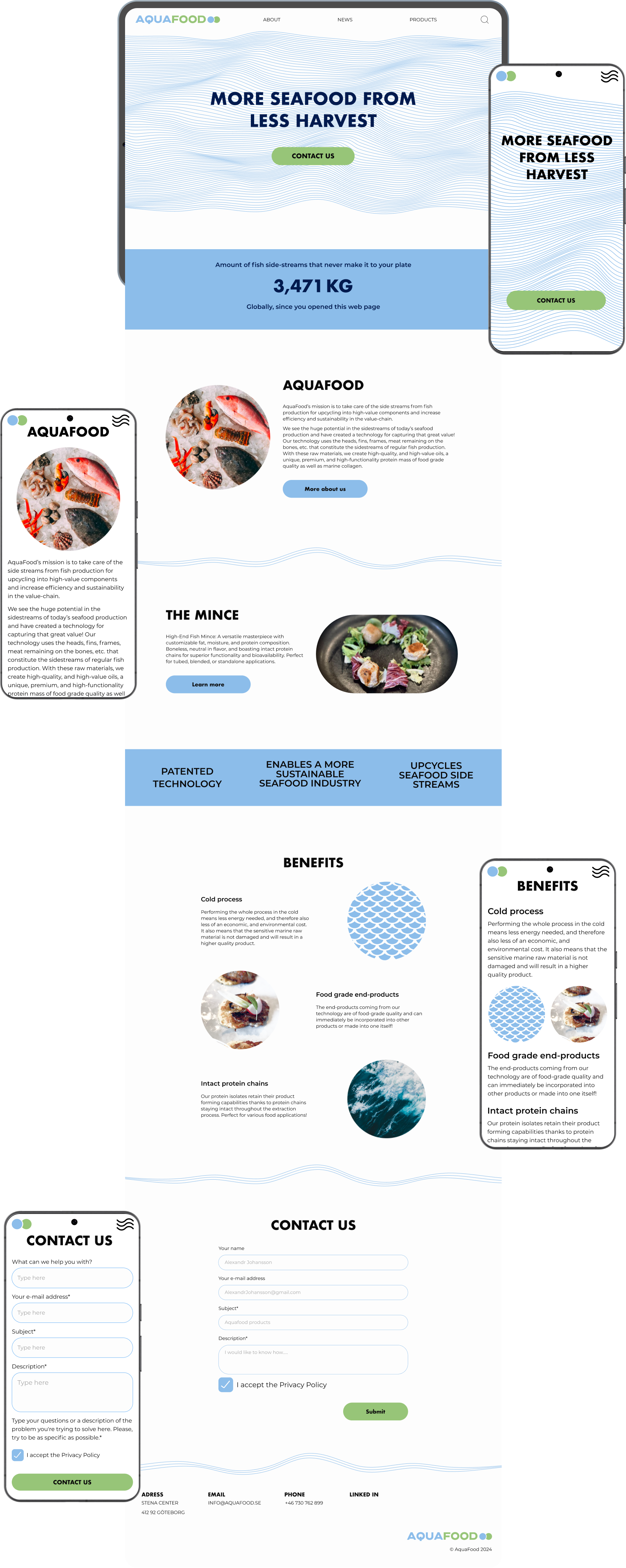
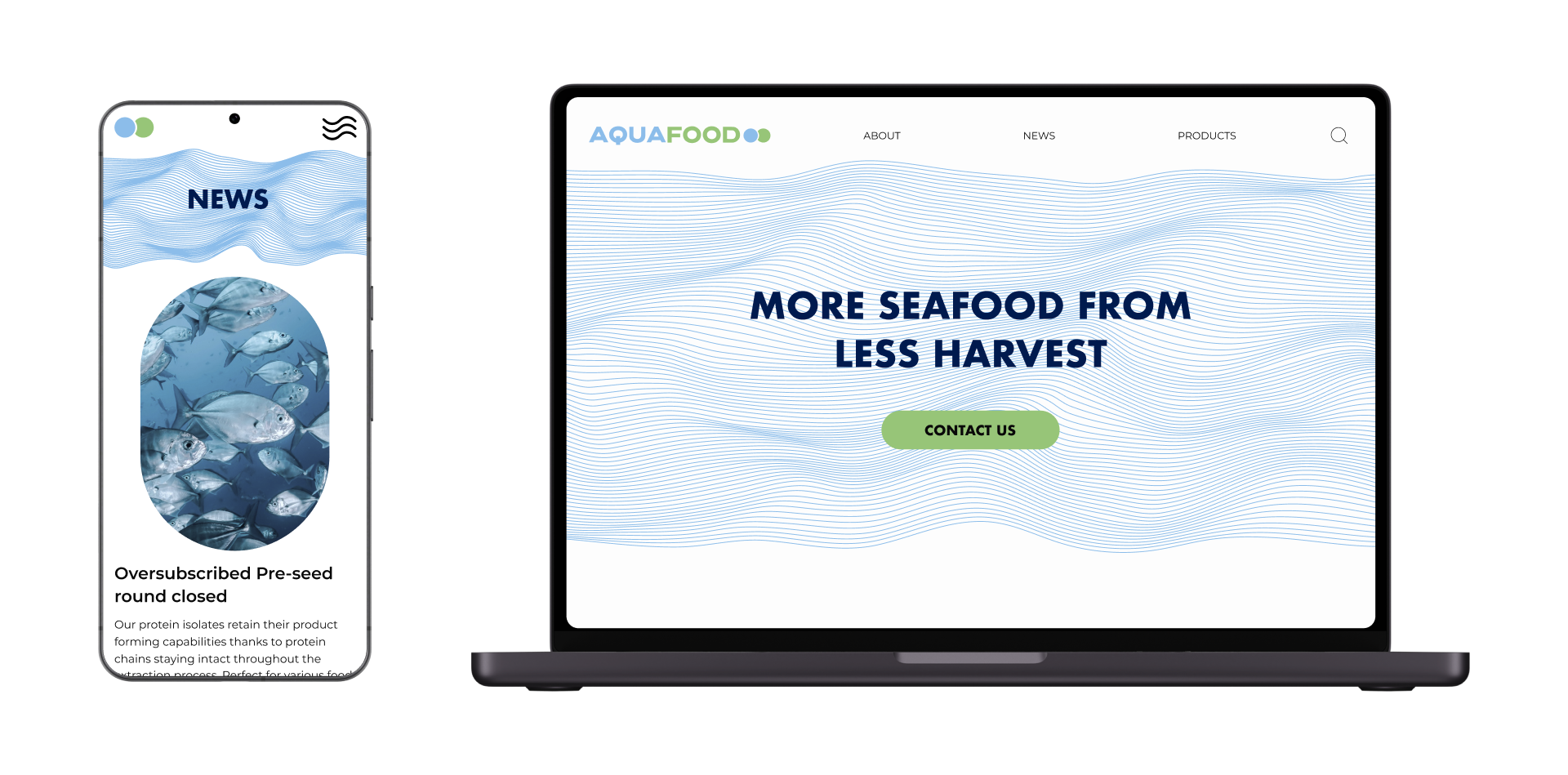
A project showcase was created to present the design solution clearly to the client and key stakeholders. It brought together research insights, wireframes, and the final visual design to demonstrate how business goals and user needs were translated into a cohesive website. The showcase helped communicate design decisions, align expectations, and validate the solution before and after implementation.
Reflection
Team
Outcomes
The project was completed by a team of three designers. The role focused on art direction, shaping the overall visual concept, design direction, and brand expression. Responsibilities included guiding visual decisions, aligning design outcomes with business goals, and ensuring consistency across layouts, typography, and imagery, while collaborating closely with the rest of the team throughout the process.
This project highlighted the importance of designing for clarity in early-stage B2B startups. Working with evolving requirements reinforced the need for flexible layouts and scalable content structures. The process strengthened skills in translating complex technology and sustainability concepts into clear, accessible messaging, while balancing business goals with user needs.
The project resulted in a clean, modern, and scalable website that clearly communicates AquaFood’s mission, technology, and value proposition to B2B stakeholders. The design improved content clarity, enhanced credibility, and created a cohesive visual identity. The website also provides flexibility for future growth, allowing the company to expand its product showcase and update content as the business evolves.